
Images are not technically inserted into a web page; images are linked to web pages. The < img > tag creates a holding space for the referenced image.
- src : Specifies the path to the image
- alt : Specifies an alternate text for the image
** Note: ** When a web page loads; it is the browser, at that moment, that gets the image from a web server and inserts it into the page. Therefore, make sure that the image actually stays in the same spot in relation to the web page, otherwise your visitors will get a broken link icon. The broken link icon and the alt text are shown if the browser cannot find the image.
The required alt attribute provides an alternate text for an image, if the user for some reason cannot view it (because of slow connection, an error in the src attribute, or if the user uses a screen reader).
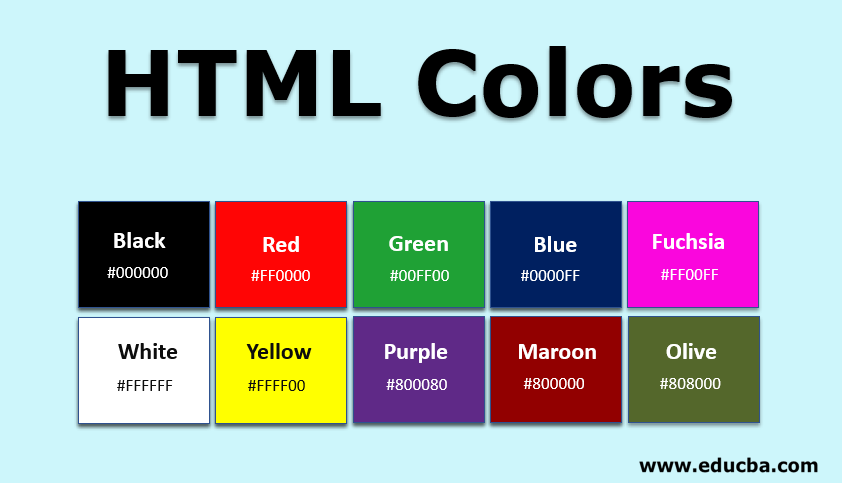
In HTML, colors can also be specified using RGB values, HEX values, HSL values, RGBA values, and HSLA values.
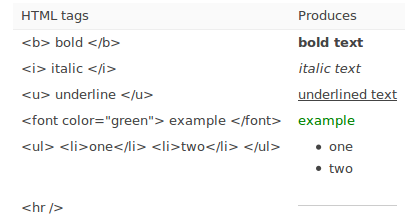
- < b > - Bold text
- < strong > - Important text
- < i > - Italic text
- < em > - Emphasized text
- < mark > - Marked text
- < small > - Smaller text
- < del > - Deleted text
- < ins > - Inserted text
- < sub > - Subscript text
- < sup > - Superscript text
The font-family property can hold several font names as a "fallback" system. If the browser does not support the first font, it tries the next font.
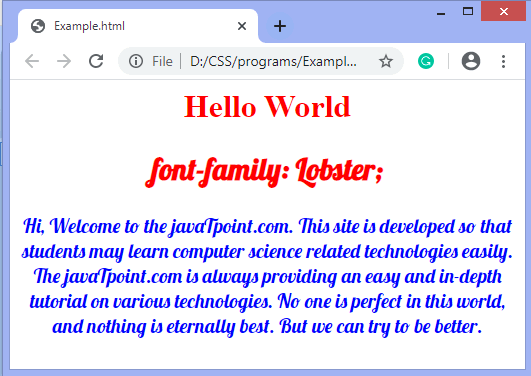
- family-name - The name of a font-family, like "times", "courier", "arial", etc.
- generic-family - The name of a generic-family, like "serif", "sans-serif", "cursive", "fantasy", "monospace".