React15 组件的生命周期如图:

React16.3 之后组件的生命周期变为:
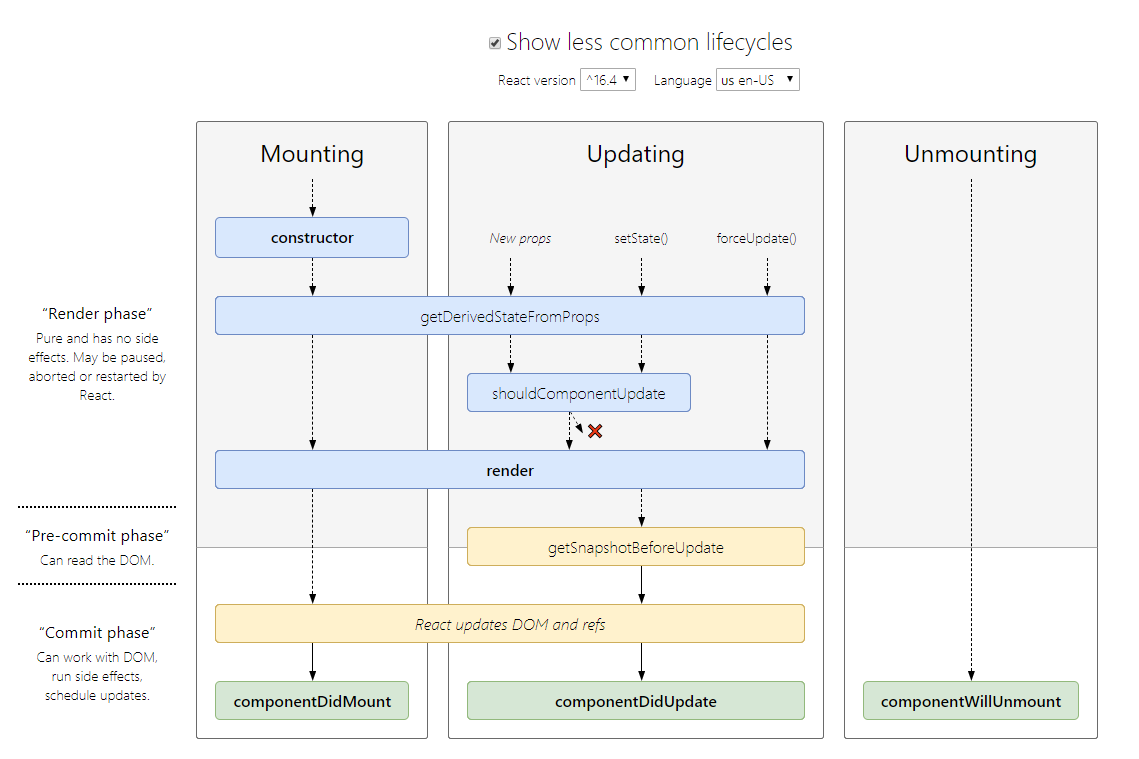
新生命周期废弃了 componentWillMount,componentWillReceiveProps,componentWillUpdate 三个方法。取而代之的是两个新的周期函数:static getDerivedStateFromProps 和 getSnapshotBeforeUpdate。
从新生命周期的图中能看出,组件的生命周期分为三个阶段:挂载阶段(Mounting),更新阶段(Updating)及卸载阶段(Unmounting),每个阶段根据代码的执行顺序又可以分为
- 渲染阶段(Render phase):渲染阶段涉及的周期函数全是纯函数,没有任何副作用。
- 预提交阶段(Pre-commit phase):该阶段可以读取真实 DOM 节点。
- 提交阶段(Commit phase):该阶段可以操作 DOM 节点并且执行有副作用的代码。
新老生命周期三阶段对比:
|
老生命周期 |
新生命周期 |
| 挂载阶段 |
constructor
componentWillMount
render
componentDidMount |
constructor
static getDerivedStateFromProps
render
componentDidMount |
| 更新阶段 |
componentWillReceiveProps
shouldComponentUpdate
componentWillUpdate
render
componentDidUpdate |
static getDerivedStateFromProps
shouldComponentUpdate
render
getSnapshotBeforeUpdate
componentDidUpdate |
| 卸载阶段 |
componentWillUnmount |
componentWillUnmount |
再看下新增的两个方法:
static getDerivedStateFromProps(props,state):它的主要作用是在 props 变化时衍生计算新的 state,与 componentWillReceiveProps 的差异在于:
| static getDerivedStateFromProps(props, state) |
componentWillReceiveProps(nextProps) |
静态方法,不能调用实例的 this |
非静态方法,可以调用实例的 this |
接收参数有两个 props (组件当前接收的最新参数)和 state(组件当前的内部状态) |
接收参数只有 nextProps |
根据该方法的返回值自动设置组件的 state |
手动调用 setState 设置组件的 state |
触发条件有挂载阶段构造函数执行之后,props change,setState(),forceUpdate() |
触发条件只有 props change |
getDerivedStateFromProps 方法出现之前,componentWillReceiveProps 方法主要解决两个问题:根据 nextProps 计算 nextState 和 根据 nextProps 触发新异步方法,引入 React16 新生命周期后,前一个问题可以放在 getDerivedStateFromProps 中解决,后一个问题被建议放到 componentDidUpdate 中去解决。React 官方希望开发者能够谨慎使用 getDerivedStateFromProps。
在使用 static getDerivedStateFromProps 或 componentWillReceiveProps 时,要注意两个反模式:无条件拷贝 props 到 state 和 在 props 变化时清除 state。正确的解法参考完全受控组件和使用 key 的非受控组件。
getSnapshotBeforeUpdate(prevProps, prevState):该方法在 componentDidUpdate 之前被调用,该函数主要作用是在更新真实节点之前获取节点的信息,在一些特定场景下(如计算滚动条位置)比较有用。static getDerivedStateFromError(error):除了上面两个新的周期函数,React16.6 又引入了一个新的生命周期。该生命周期的主要作用是捕获子组件抛出的错误,然后根据错误更新父组件的状态。

React15 组件的生命周期如图:
React16.3 之后组件的生命周期变为:
新生命周期废弃了
componentWillMount,componentWillReceiveProps,componentWillUpdate三个方法。取而代之的是两个新的周期函数:static getDerivedStateFromProps和getSnapshotBeforeUpdate。从新生命周期的图中能看出,组件的生命周期分为三个阶段:挂载阶段(Mounting),更新阶段(Updating)及卸载阶段(Unmounting),每个阶段根据代码的执行顺序又可以分为
新老生命周期三阶段对比:
componentWillMount
render
componentDidMount
static getDerivedStateFromProps
render
componentDidMount
shouldComponentUpdate
componentWillUpdate
render
componentDidUpdate
shouldComponentUpdate
render
getSnapshotBeforeUpdate
componentDidUpdate
再看下新增的两个方法:
static getDerivedStateFromProps(props,state):它的主要作用是在props变化时衍生计算新的state,与componentWillReceiveProps的差异在于:thisthisprops(组件当前接收的最新参数)和state(组件当前的内部状态)nextPropsstatesetState设置组件的stateprops change,setState(),forceUpdate()props changegetDerivedStateFromProps方法出现之前,componentWillReceiveProps方法主要解决两个问题:根据nextProps计算nextState和 根据nextProps触发新异步方法,引入 React16 新生命周期后,前一个问题可以放在getDerivedStateFromProps中解决,后一个问题被建议放到componentDidUpdate中去解决。React 官方希望开发者能够谨慎使用getDerivedStateFromProps。在使用
static getDerivedStateFromProps或componentWillReceiveProps时,要注意两个反模式:无条件拷贝props到state和 在props变化时清除state。正确的解法参考完全受控组件和使用key的非受控组件。getSnapshotBeforeUpdate(prevProps, prevState):该方法在componentDidUpdate之前被调用,该函数主要作用是在更新真实节点之前获取节点的信息,在一些特定场景下(如计算滚动条位置)比较有用。static getDerivedStateFromError(error):除了上面两个新的周期函数,React16.6 又引入了一个新的生命周期。该生命周期的主要作用是捕获子组件抛出的错误,然后根据错误更新父组件的状态。