https://blog.yugabyte.com/a-busy-developers-guide-to-database-storage-engines-the-basics/
A database storage engine is an internal software component that a database server uses to store, read, update, and delete data in the underlying memory and storage systems.
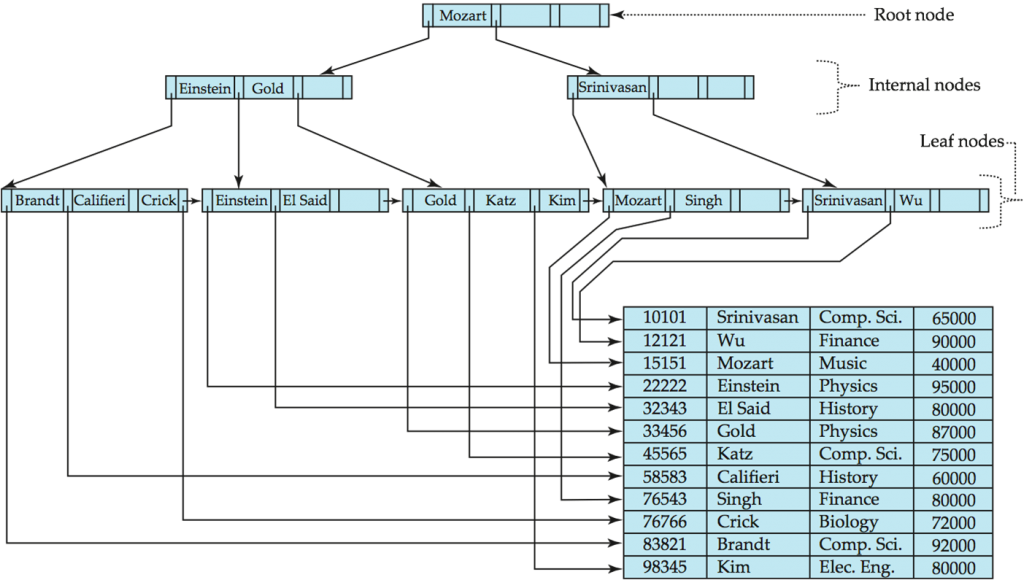
- B-trees usually grow wide and shallow, so for most queries very few nodes need to be traversed.
- The net result is high throughput, low latency reads
- The need to maintain a well-ordered data structure with random writes usually leads to poor write performance
- This is because random writes to the storage are more expensive than sequential writes.
As data volumes grew in the mid 2000s, it became necessary to write larger datasets to databases. B-tree engines fell out of favor given their poor write performance.
Database designers turned to a new data structure called log-structured merge-tree (or LSM tree)
The LSM tree is a data structure with performance characteristics best fit for indexed access to files with high write volume over an extended period.

- LSM engines are the de facto standard today for handling workloads with large fast-growing data.
- Fast sequential writes (as opposed to slow random writes in B-tree engines)
- LSM tree based exhibit poor read throughput in comparision to B-tree based engine
- LSM engines consume more CPU resources during read operations and take more memory/disk storage. However these issues get mitigated in practice:
- Reads are made faster with approaches such as bloom filters
- Apache Cassandra, Elasticsearch, RocksDB, InfluxDB

At the core, database storage engines are usually optimized for either read performance (B-tree) or write performance (LSM).
In the last 10+ years data volumes have grown significantly and LSM engines have become the standard. LSM engines can be tuned more easily for higher read performance compare to B-tree engines.