#Swift Intro Video
###Constants and Vars
- Swift prefers immutability
- you can use unicode characters for var names 
####Type inference no need to specify type
###String
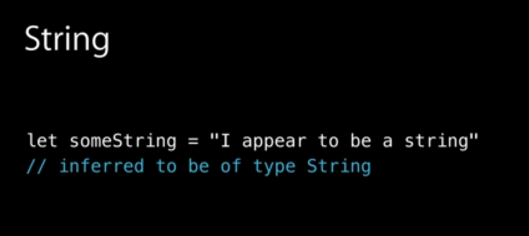
- collection of characters, can use a for in loop to iterate over characters
- can combine strings and characters
####Building Complex Strings
- interpolations
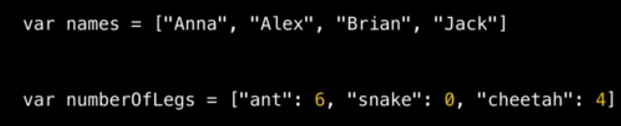
####Array and Dictionaries
- can work with any type, don't have to be objects or clas types
- Collections are typed collections. Can provide a type annotation to specify only accepts strings.
##Loops ###Create and modify collections ####For-in loop
- characters, strings, ranges 11:51, arrays, dictionaries
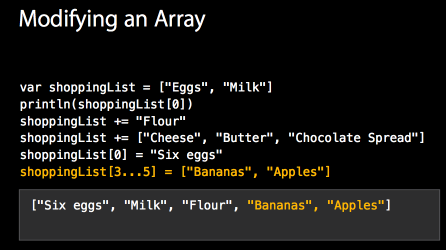
####Modifying an Array
- Nothing is represented by
nil
###If Statements
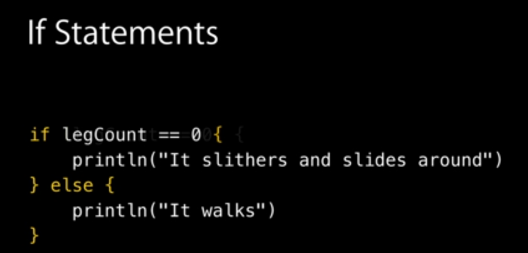
- optional parens
- braces required
###Switch Statements
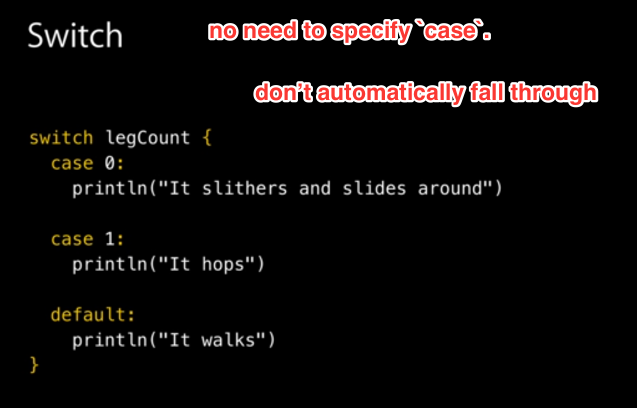
- must supply
defaultcase. either acasefor every value or adefault.
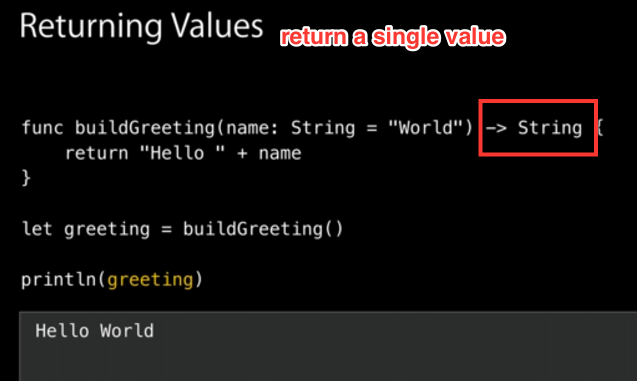
##Functions
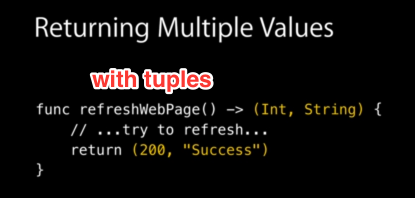
###Tuples
-
usefule when u want to pass around multiple values simply like when a function returns multiple values
-
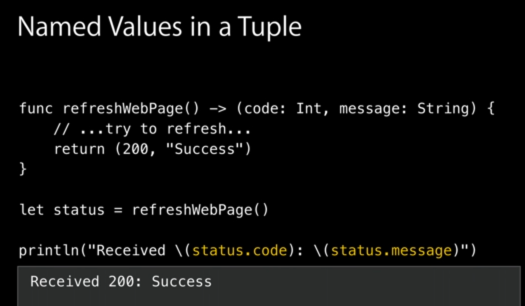
u get at those values with a constant
-
for each iteration of the dict you get a tuple pair
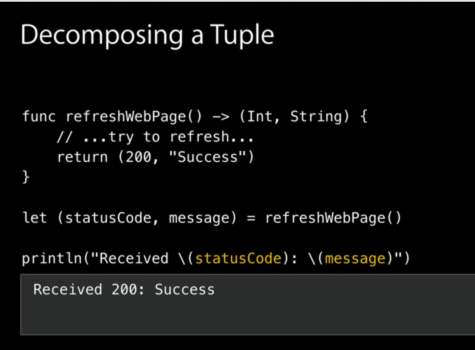
####Another wayt o get values:
##Closures
- no need to specify types
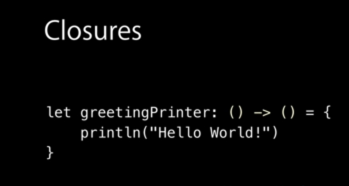
- functions are named closures in Swift
##Classes
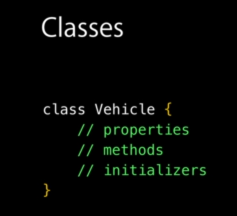
- no header files
- no base class required, can use NSObject for ex if you want
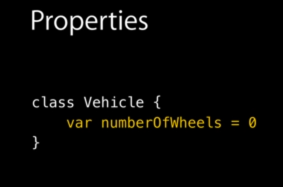
- would be
letinstead ofvarif you don't want to change it later on - stored and computed properties 30:52
- computed properties, even read-only ones do need to be defined as variables
####Initializer Syntax
No more alloc!
- won't need an initializer if you had supplied a default value
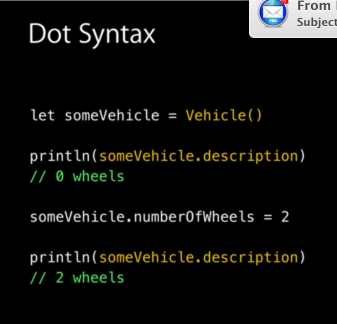
####Dot Syntax
####Class initialization
- see intermediate talk
####Adding Methods to Functions
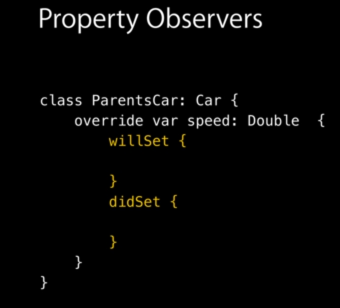
####Property Observers
left off at 36:10