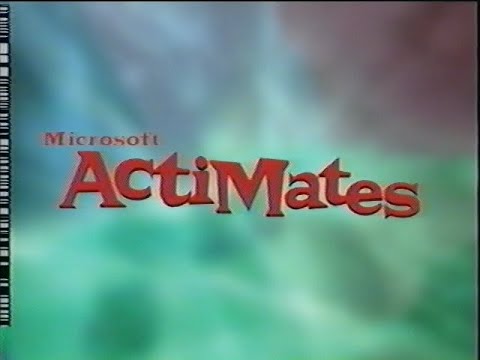
A research/reverse-engineering toolkit for extracting and identifying commands encoded as optical barcodes in ActiMates VHS tapes The barcode signal is embedded as a thin vertical strip in the video, which the toy reads to trigger synchronized responses
This project is unfinished and experimental — many things don't work correctly yet See the Known Issues section before using
The main decoder application Opens a video file, locates the barcode strip frame by frame, extracts bits from pixel intensities, groups them into packets, hashes each packet (SHA-1), and logs the results Unknown commands are stored in a local database for later identification
A companion GUI for managing the commands.json database produced by the decoder Lets you rename unknown command hashes, search and filter entries, view timestamps, and import/export to CSV
pip install opencv-python numpy
tkinter is required and is included with most Python 3 installations On Debian/Ubuntu, install it with:
sudo apt install python3-tkpython decode.py- Click Open Video to load a VHS capture file
- Click Preview Frame to see a random frame with the barcode region highlighted
- Adjust the Barcode Region Calibration sliders until the green rectangle aligns with the barcode strip in the debug window
- Set your desired Speed (frame skip) — higher values are faster but may miss short blinks
- Click Decode... and optionally enable auto-export for SRT and WAV output
- Click Start Decode
Decoded events are logged in the text area Results are saved to commands.json in the working directory
python analysis.pyOpens commands.json automatically if present Double-click any entry to rename it Supports batch rename, find & replace, CSV import/export, and filtering by named/unknown status
| File | Description |
|---|---|
commands.json |
Database of hashed command packets and their names/timestamps |
*_decoded.srt |
SubRip subtitle file with command names and timestamps |
*_barcode.wav |
Audio representation of the barcode strip (spectrogram-style WAV) |
These two videos show what the barcode audio export actually sounds like in practice The audio is extracted directly from the barcode strip column of the original VHS footage
Example 1 — Raw barcode audio from a cartoon episode The background audio from the cartoon itself bleeds through, which is expected since the barcode strip is part of the same video signal:
Example 2 — Raw barcode audio where the ActiMates plush responses are audible alongside the barcode signal, giving a clearer sense of the timing relationship between the signal and the toy's reactions:

⚠️ This project is in early/experimental state Expect rough edges
Decoding accuracy is unreliable The bit extraction logic uses a simple per-line mean threshold, which is very sensitive to video quality, noise, and barcode alignment Even small calibration errors produce incorrect or inconsistent packet hashes
The "blink" detection is fragile The silence-based blink separator (MIN_SILENCE_FRAMES = 5) was chosen arbitrarily and will split or merge blinks incorrectly depending on the source material There is no validation that a detected blink corresponds to a real command
Packet hashing is positional, not error-corrected Packets are hashed as raw bit arrays A single flipped bit produces a completely different hash, meaning the same real command can appear under dozens of different hashes depending on noise
Timestamp recording has a known mismatch bug The code itself warns about this: after decoding, it prints a WARNING: Timestamp mismatch! if the number of timestamps recorded differs from those actually saved This has been observed in practice and the root cause is not yet resolved
The barcode audio export doesn't represent commands The WAV export converts raw pixel intensities to audio via linear interpolation — it's a spectrogram-style visualization, not a faithful audio encoding of the command signal It is useful for human inspection but not for programmatic analysis
bits_to_audio() is defined but never called A second audio encoding function exists in decode.py that converts bit arrays to square-wave audio, but it is unused and unreachable from the UI
Frame skipping can silently miss commands Using 5x, 10x, or 20x speed skips frames and will drop short blinks that don't span enough frames to survive the skip interval
Ultra Fast mode disables all debug feedback When "ULTRA FAST (No Preview)" is checked, the debug window is destroyed and no visual feedback is available while decoding runs
The database manager's search only matches command names, not hashes Looking up a specific hash requires scrolling manually or exporting to CSV
No undo functionality Renaming or batch-renaming commands in the database manager cannot be undone Always keep a backup of commands.json
Packet boundaries are assumed, not detected The decoder uses a fixed PACKET_SIZE = 128 bits with no start/stop markers or alignment detection If the barcode data doesn't start on a packet boundary, all subsequent packets will be misaligned
Key constants at the top of the file that may need tuning per source video:
| Constant | Default | Description |
|---|---|---|
BAR_X_OFFSET |
0 |
Horizontal start of barcode strip |
BAR_WIDTH |
12 |
Width of barcode strip in pixels |
LINES_IGNORE_TOP |
10 |
Lines to skip at top of strip |
LINES_IGNORE_BOTTOM |
10 |
Lines to skip at bottom of strip |
THRESHOLD_MODE |
"adaptive" |
"adaptive" (mean) or "fixed" |
PACKET_SIZE |
128 |
Bits per packet |
MIN_SILENCE_FRAMES |
5 |
Frames of no signal to delimit a blink |
CONSTANT_SIGNAL_TOP_LINES |
5 |
Additional top lines treated as constant signal |