Nine vintage synthesizer emulations for the RP2350, built from one shared codebase. Same board, same core, one firmware image per instrument.

| Folder | Instrument | Binary |
|---|---|---|
| instruments/PicoFaceYC | Yamaha reface YC (drawbar organ) | PicoFaceYC.uf2 |
| instruments/PicoFaceCP | Yamaha reface CP (electric piano, mdaEPiano) | PicoFaceCP.uf2 |
| instruments/PicoFaceDX | Yamaha reface DX (4-operator FM) | PicoFaceDX.uf2 |
| instruments/PicoFaceRD | Roland RD / MKS-20 (sample piano) | PicoFaceRD.uf2 |
| instruments/PicoFaceJ6 | Roland Juno-6 | PicoFaceJ6.uf2 |
| instruments/PicoFaceMD | Minimoog Model D | PicoFaceMD.uf2 |
| instruments/PicoFaceSM | ARP/Eminent Solina String Ensemble | PicoFaceSM.uf2 |
| instruments/PicoFaceOB | Oberheim OB-X (engine ported from OB-Xf) | PicoFaceOB.uf2 |
| instruments/PicoFaceJV | Roland JV-880 (native engine over the original PCM data) | local build only |
The JV-880 is the one exception to "download and flash": it only builds where a
JV-880 ROM set is present, and the ROMs are not distributable, so it is not in
the release binaries. Without them the configure step skips it and the eight
above are unaffected. It runs on the hardware, and -DPICOFACEJV_4MB=ON fits it
on a base 4 MB Pico 2.
- RP2350
- Board
sparkfun_promicro_rp2350 - I2S audio
- 128x64 OLED over I2C
- Three rotary encoders with push buttons
- USB MIDI and DIN MIDI
The pin map is the same for every instrument and lives in core/include/project_config.h.
git clone --recurse-submodules https://github.com/Michi71/PicoVintageSynthCollection.git
cd PicoVintageSynthCollection
cmake -S . -B build -G Ninja -DCMAKE_BUILD_TYPE=Release
cmake --build build
The artifacts are then in build/<instrument>.uf2.
Building a single instrument:
cmake -S . -B build -G Ninja -DCMAKE_BUILD_TYPE=Release -DPICOFACE_INSTRUMENTS_FILTER=PicoFaceMD
cmake --build buildOn macOS a mixed package manager prefix produces this, and it reads like a problem with the project:
dyld: Library not loaded: /opt/local/lib/libarchive.13.dylib
  Referenced from: /opt/local/bin/cmake
  Reason: (mach-o file, but is an incompatible architecture (have 'arm64', need 'x86_64'))
Abort trap: 6
It is not. The complaint comes from dyld about loading cmake itself, before
any of this repository is read, and "need 'x86_64'" means the cmake binary is
an Intel build sitting next to Apple Silicon libraries — a MacPorts or Homebrew
prefix that was installed under Rosetta, or carried over from an Intel Mac
without the migration. Check with:
uname -m                 # arm64 on Apple Silicon
file $(which cmake)      # must say the same
If they disagree, reinstall the toolchain for the machine's own architecture (MacPorts documents a migration procedure for exactly this). Apple Silicon itself is fine: the collection is developed on it.
core/            shared runtime: audio pipeline, hardware, USB/DIN MIDI, GUI, persistence
cmake/           picoface_add_instrument() and the SDK import helpers
lib/             third-party static libraries (audio, encoder, u8g2) and the SDK submodules
instruments/     one folder per instrument: instrument.cmake, src/, include/, doc/, README.md
tools/           host-side tools; not part of any firmware image
docs/            documentation shared by all instruments
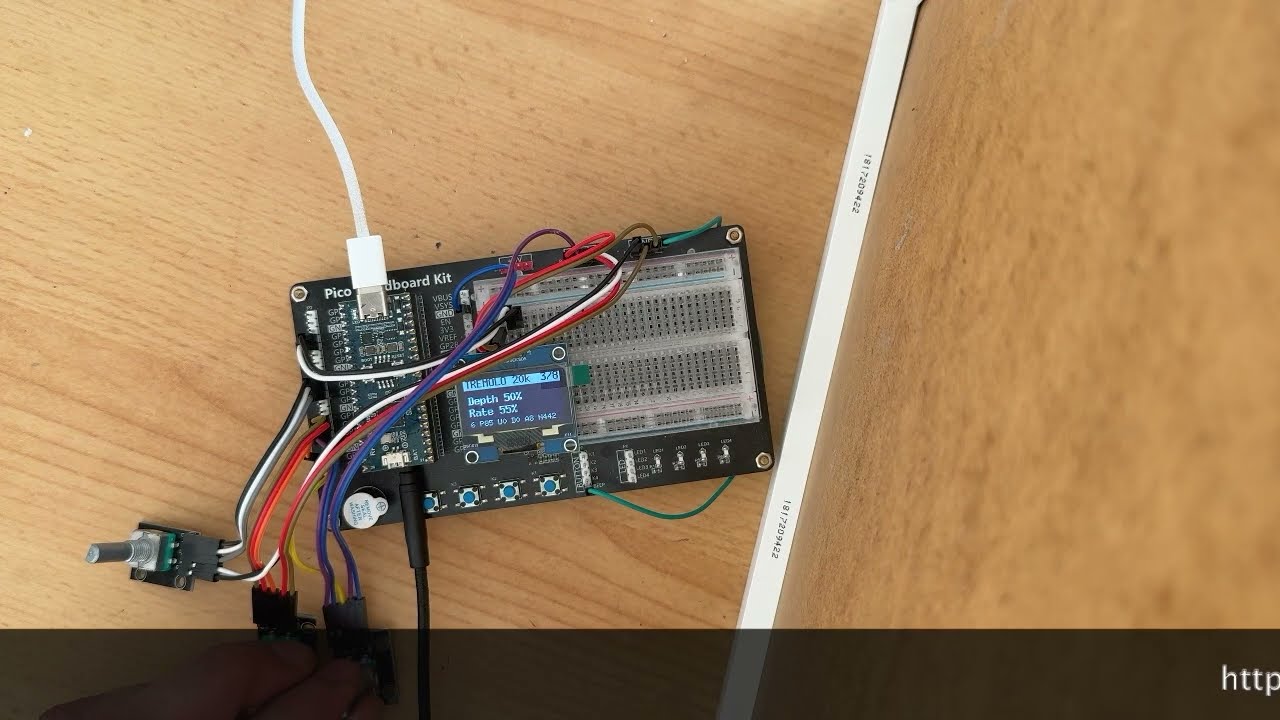
img/             photos of the prototype hardware
Shared:
- Architecture - how core and instruments fit together, and why
- Adding an instrument - the three steps needed
- Host tools
Per instrument, under instruments/<name>/doc/: MIDI implementation charts,
persistence formats, preset tables and the engineering logs of the individual
ports. The per-instrument README links them.
Manufacturer manuals and service documentation are not part of this repository. Where an emulation follows a specific manual or schematic, the instrument's README names the document so it can be obtained separately.
All nine instruments build from a single configure run, each with its own USB PID, and all nine run on the hardware. Eight are in the release binaries; the JV-880 needs a local ROM set, as above. Open points are listed in docs/ARCHITECTURE.md, section 8.
GNU General Public License, version 3 or later - see LICENSE. Copyright (C) 2026 Michi71.
That is what every one of the seven single-instrument repositories this collection was assembled from already declared: all seven shipped the identical GPL-3 licence text, and every instrument README states GPL-3. It is also the lowest common denominator of what the engines are built on. Where an instrument derives from someone else's work:
| Part | Upstream it derives from | That upstream's license |
|---|---|---|
| core, cmake, tools | own work | - |
| PicoFaceYC | OpenB3 / BeatrixCPP - tone generation concepts only, no code | AGPL-3.0 upstream, does not reach here; see below |
| PicoFaceCP | mda-EPiano (engine, in tree) | GPL-3.0-or-later |
| PicoFaceDX | an ESP32 reface DX emulation (engine) | see that project |
| PicoFaceRD | giulioz/rdpiano + MAME (reference emulator, host side only) | GPL |
| PicoFaceJ6 | junox (patch table, parameter scaling) | GPL-3 |
| PicoFaceMD | BelaMiniMoogEmulation (ladder filter) | stated by its author to be under no copyright |
| PicoFaceSM | string-machine (DSP models) | Boost Software License 1.0 |
| PicoFaceOB | OB-Xf (engine) | GPL-3.0-or-later |
instruments/PicoFaceOB/ additionally carries its own LICENSE, identical in
text, because that instrument's engine is a direct port of OB-Xf and its files
keep the upstream copyright headers. Every instrument builds into its own
binary, so a stricter licence on one of them stays confined to that binary.
Source files carry a two-line SPDX header rather than the full notice, to keep it out of the way of the code. Three kinds exist:
- own work:
GPL-3.0-or-laterplus the copyright line; - ported trees (
instruments/PicoFaceDX/include/dx_engine/,instruments/PicoFaceRD/**/rd_engine/): the licence line plus a note that copyright is shared with the upstream authors - no sole claim is made there; - upstream files (
instruments/PicoFaceOB/include/obxf/, CP'smdaEPiano.*, MAME'smame_utils.handmcu_ops.h, the SDK-derivedusb_descriptors.c,get_serial.*andtusb_config.h): untouched, they keep the header they came with. The last four are MIT and BSD-3-Clause, not GPL.
On PicoFaceYC and the AGPL. OpenB3 / BeatrixCPP, whose tone generation
concepts the YC drawbar engine follows, is AGPL-3.0 - stricter than GPL-3, and
not something that can be dropped by relicensing. It does not apply here: the
engine under instruments/PicoFaceYC/include/yc_engine/ was written for this
project and contains no upstream code, which is why no file there carries an
upstream copyright header. Copyright covers the expression, not the concepts,
so GPL-3 is the right licence for it.