Hardware-backed Android wallet for x402 payments.
Generates secp256k1 seeds on-device, wraps them with a StrongBox-resident
AES-256-GCM key, signs EIP-3009 transferWithAuthorization per biometric
tap, and settles real USDC on Base Sepolia.
Built as a sequenced learning artifact in four steps so each layer's tradeoffs are visible. Companion notes cover the path forward to passkey + smart-wallet signing without the brief plaintext-in-RAM window the current architecture requires.
| Step | Stack | What it does |
|---|---|---|
| 1 | Node + @x402/axios |
Hello-world x402 client; pays a public demo endpoint, prints the on-chain tx hash |
| 2 | Kotlin CLI + web3j | Same payment, no SDK — hand-built EIP-712 signing of TransferWithAuthorization |
| 3 | Android (Pixel) | First app on real hardware; key hardcoded in BuildConfig from a gitignored local.properties |
| 4 | Android (Pixel) | The real demo — seed generated on-device, AES-wrapped by a StrongBox key, biometric-gated per signature, multi-wallet UI |
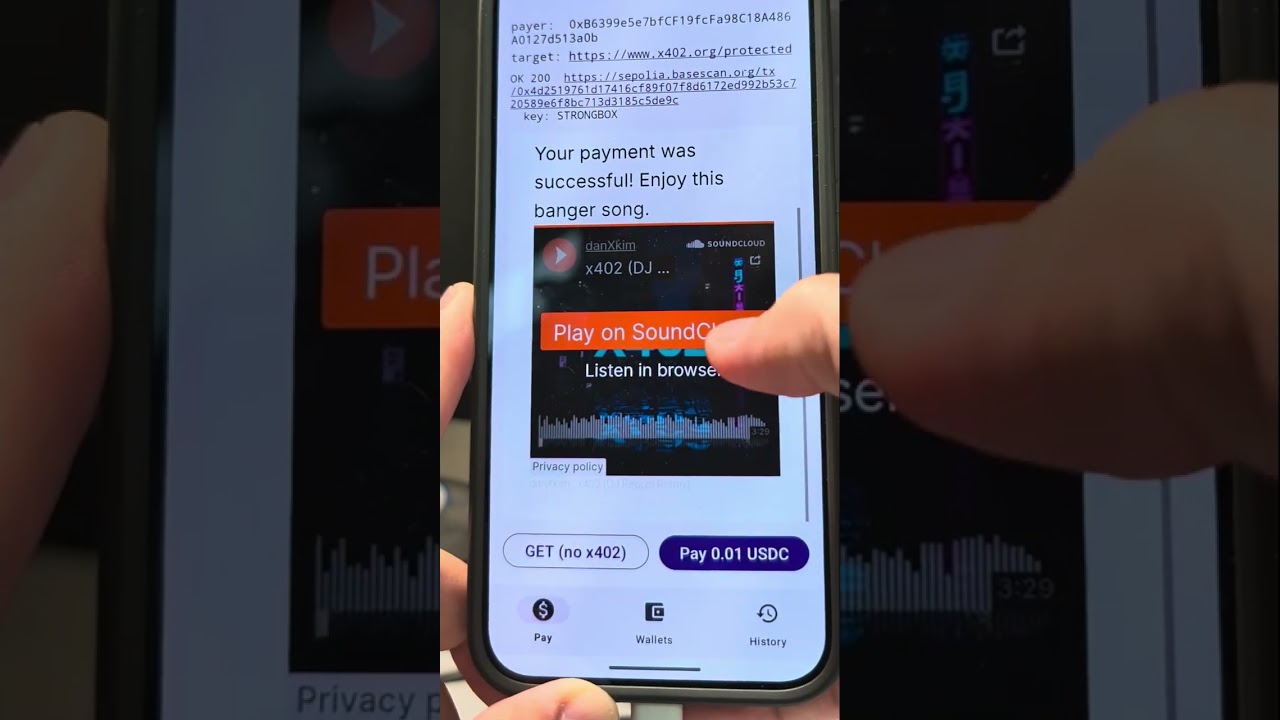
| 4.2 | Android (Pixel) | Local payment history with the security level captured per signature — proves STRONGBOX (not TRUSTED_ENVIRONMENT, not SOFTWARE) signed each tx |
Each step lives in its own subdirectory and its own commit so the progression is reviewable as diffs. Don't skip ahead — the rocks each step hits are part of the lesson.
On a Pixel 10 Pro running Android 16, the AES wrap key for every generated wallet lands in Titan M2:
I/SecureWallet: signing with key: STRONGBOX (alias=x402_seed_wrap_w_…)
Tapping Pay 0.01 USDC in the Step 4 app pops a biometric prompt, unwraps the seed for one ECDSA signature, zeros it, and posts the envelope. The settlement is a real on-chain transaction visible on BaseScan.
┌─────────────────────────────────────────────────────────────┐
│  StrongBox silicon (Titan M2)                               │
│    AES-256 wrap key, biometric-gated, never extractable     │
└──────────────────────┬──────────────────────────────────────┘
                       │ encrypts / decrypts
┌──────────────────────▼──────────────────────────────────────┐
│  SharedPreferences  (regular file on the phone's flash)     │
│    ct_<id>  =  base64(AES-GCM-encrypt(seed))                │
│    iv_<id>  =  base64(GCM IV)                               │
└──────────────────────┬──────────────────────────────────────┘
                       │ unwrapped briefly into RAM
┌──────────────────────▼──────────────────────────────────────┐
│  App RAM (~1 ms per signature)                              │
│    seed (32 bytes)  →  web3j EIP-712 sign  →  signature     │
│    seed.fill(0)  ← zero immediately on return               │
└──────────────────────┬──────────────────────────────────────┘
                       │ x402 envelope, base64'd, in HTTP header
┌──────────────────────▼──────────────────────────────────────┐
│  Base Sepolia                                               │
│    USDC.transferWithAuthorization()  → settled on-chain     │
└─────────────────────────────────────────────────────────────┘
The brief plaintext-seed window in app RAM is the only weakness of this architecture. It's inherent — Android KeyStore (and therefore StrongBox) doesn't support secp256k1, so the actual signing key cannot live in silicon. The AES wrap is the closest workaround.
Eliminating that window is what PATH_A_NEXT.md describes: switch the
signing key to a P-256 passkey (which StrongBox does support), sign
WebAuthn assertions in silicon, and verify them on-chain via a smart
wallet contract using the RIP-7212
P-256 precompile on Base.
What this is:
- A working reference for the encrypted-seed-wrap pattern most Android cryptocurrency wallets ship today.
- A pedagogical sequence — the value is in the diffs between steps, not just the final app.
- Testnet-only. Every constant is hardcoded to Base Sepolia.
What this isn't:
- Production-ready. The plaintext-seed-in-RAM window during signing is a
real (if narrow) weakness; for regulated payments, identity systems, or
custodial infrastructure, see Path A's plan in
PATH_A_NEXT.md. - Generic. It implements x402 specifically; nothing about the architecture is x402-bound, but the code is.
- A general Android wallet library.
SecureWallet.ktis extractable into one (and arguably should be) but isn't packaged as such yet.
Prerequisites:
- Pixel 3+ or Samsung flagship from 2019+ (any device with
FEATURE_STRONGBOX_KEYSTORE) - biometric enrolled
- Android Studio with API 35 SDK
- JDK 17
git clone https://github.com/openmobilehub/x402-android
cd x402-android/step4-android-strongbox
cp local.properties.example local.properties
# Studio populates sdk.dir automatically on first open;
# Step 4 doesn't need a PRIVATE_KEY (seed is generated on-device).
./gradlew :app:installDebug
For Steps 1–3, see each subdirectory's README. They each take a real test wallet funded from faucet.circle.com (USDC) and an Alchemy faucet (a tiny bit of ETH for the gas-using side ops).
PATH_A_NEXT.md— the next concrete steps: P-256 passkey via Credential Manager, smart wallet on Base, x402 wiringPATH_C_MPC.md— alternative architecture, MPC threshold signing; deferred but documentedPATH_C_WIREFRAMES.md— UX sketches for Path C, including the agent-management screenSTEP_5_4_VC_PAYMENTS.md— bridging Verifiable Intent (SD-JWT) + AP2 agent flow + x402 settlement; sits after Path A
Apache 2.0 — see LICENSE.