



Documentation | Quick Start | Installation
Continuous code review for AI coding agents. roborev runs in the background, reviews every commit as agents write code, and surfaces issues in seconds -- before they compound. Pull code reviews into your agentic loop while context is fresh.
- Run
roborev initto install a post-commit hook - Every commit triggers a background review -- agents write, roborev reads
- View findings in the TUI, feed them to your agent, or let
roborev fixhandle it
cd your-repo
roborev init          # Install post-commit hook
git commit -m "..."   # Reviews happen automatically
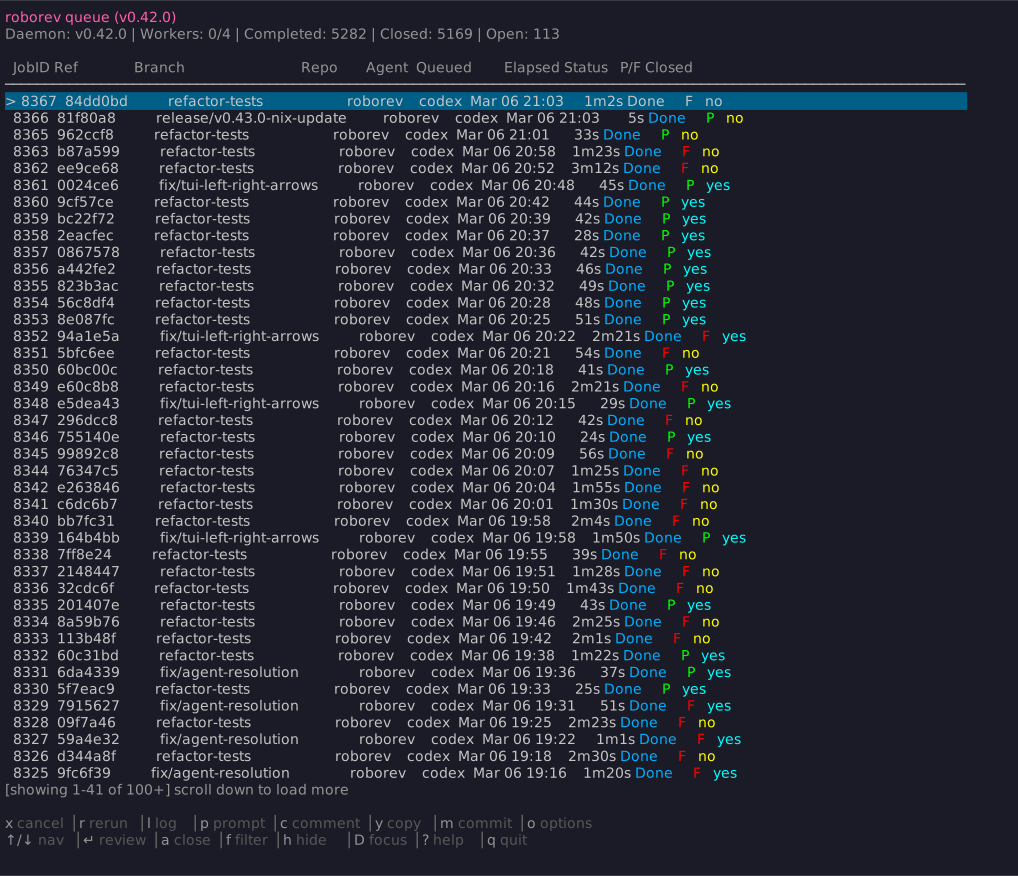
roborev tui           # View reviews in interactive UI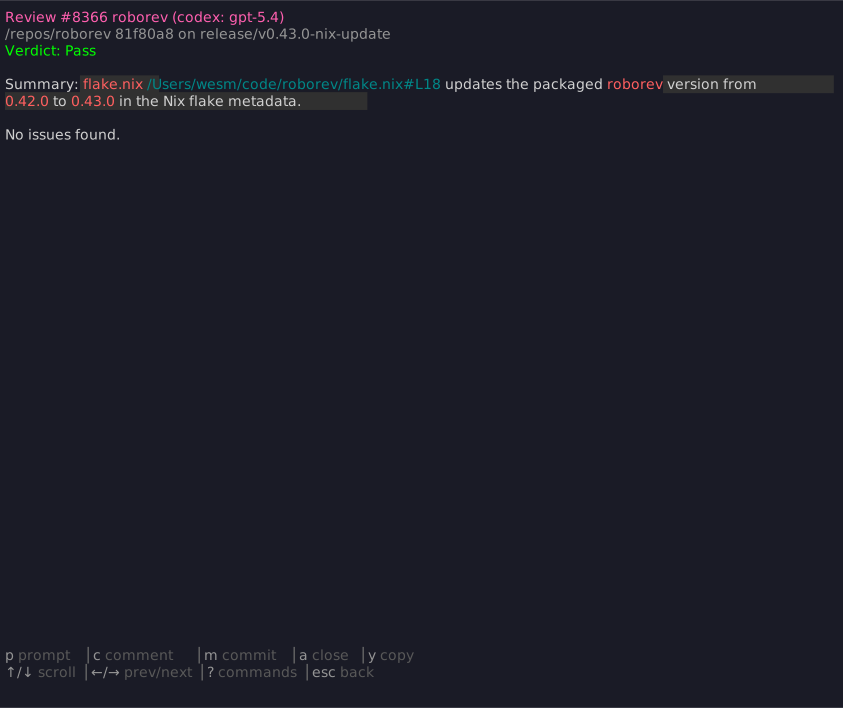
- Background Reviews - Every commit is reviewed automatically via git hooks. No workflow changes required.
- Auto-Fix -
roborev fixfeeds review findings to an agent that applies fixes and commits.roborev refineiterates until reviews pass. - Code Analysis - Built-in analysis types (duplication, complexity, refactoring, test fixtures, dead code) that agents can fix automatically.
- Multi-Agent - Works with Codex, Claude Code, Gemini, Copilot, OpenCode, Cursor, Kiro, Kilo, Droid, and Pi.
- Runs Locally - No hosted service or additional infrastructure. Reviews are orchestrated on your machine using the coding agents you already have configured.
- Interactive TUI - Real-time review queue with vim-style navigation.
- Review Verification -
roborev compactverifies findings against current code, filters false positives, and consolidates related issues into a single review. - Extensible Hooks - Run shell commands on review events. Built-in beads integration creates trackable issues from review failures automatically.
When reviews find issues, copy-and-paste the reviews into your
interactive agent sessions, or invoke the roborev:fix skills. You
can also address open reviews on the command line non-interactively
with roborev fix.
roborev fix shows the review findings to an agent, which applies
changes and commits. The new commit gets reviewed automatically,
closing the loop.
For fully automated iteration (advanced feature), use refine:
roborev refine # Fix, re-review, repeat until passingrefine runs in an isolated worktree and loops: fix findings, wait for
re-review, fix again, until all reviews pass or --max-iterations is hit.
Run targeted analysis across your codebase and optionally auto-fix:
roborev analyze duplication ./...           # Find duplication
roborev analyze refactor --fix *.go         # Suggest and apply refactors
roborev analyze complexity --wait main.go   # Analyze and show results
roborev analyze test-fixtures *_test.go     # Find test helper opportunities
Available types: test-fixtures, duplication, refactor, complexity,
api-design, dead-code, architecture.
Analysis jobs appear in the review queue. Use roborev fix <id> to
apply findings later, or pass --fix to apply immediately.
Shell Script (macOS / Linux):
curl -fsSL https://roborev.io/install.sh | bashHomebrew (macOS / Linux):
brew install roborev-dev/tap/roborevWindows (PowerShell):
powershell -ExecutionPolicy ByPass -c "irm https://roborev.io/install.ps1 | iex"With Go:
go install github.com/roborev-dev/roborev/cmd/roborev@latestThis repo uses prek for local pre-commit checks.
The hook is a local system hook that runs make lint, so pre-commit can apply
golangci-lint --fix automatically instead of using the upstream
golangci-lint pre-commit repository. The hook is configured with
always_run = true, so it runs on every commit, not just commits that touch
Go files.
brew install prek     # or use your preferred prek install method
prek install          # install the local git hook
prek run --all-files  # run the configured checks manually
If the hook rewrites files, re-stage them and re-run git commit. Use
make lint-ci when you want a non-mutating lint check.
| Command | Description |
|---|---|
roborev init |
Initialize roborev in current repo |
roborev tui |
Interactive terminal UI |
roborev status |
Show daemon and queue status |
roborev review <sha> |
Queue a commit for review |
roborev review --branch |
Review all commits on current branch |
roborev review --dirty |
Review uncommitted changes |
roborev fix |
Fix open reviews (or specify job IDs) |
roborev refine |
Auto-fix loop: fix, re-review, repeat |
roborev analyze <type> |
Run code analysis with optional auto-fix |
roborev compact |
Verify and consolidate open review findings |
roborev show [sha] |
Display review for commit |
roborev run "<task>" |
Execute a task with an AI agent |
roborev close <id> |
Close a review |
roborev skills install |
Install agent skills for Claude/Codex |
See full command reference for all options.
Create .roborev.toml in your repo:
agent = "claude-code"
review_guidelines = """
Project-specific review instructions here.
"""
See configuration guide for all options.
| Agent | Install |
|---|---|
| Codex | npm install -g @openai/codex |
| Claude Code | npm install -g @anthropic-ai/claude-code |
| Gemini | npm install -g @google/gemini-cli |
| Copilot | npm install -g @github/copilot |
| OpenCode | go install github.com/opencode-ai/opencode@latest |
| Cursor | cursor.com |
| Kiro | kiro.dev |
| Kilo | npm install -g @kilocode/cli |
| Droid | factory.ai |
| Pi | pi.dev |
roborev auto-detects installed agents.
roborev delegates code review and fix tasks to AI coding agents that have shell access. Review agents may execute read-only git and shell commands to inspect diffs; fix agents run in isolated worktrees with full tool access.
roborev is designed for use with trusted codebases. The review prompt includes diff content and commit messages from the repository. If you are reviewing untrusted code (e.g., open-source contributions from unknown authors), run roborev inside a sandboxed environment (container, VM, or similar) to limit the blast radius of any prompt-injection attack that could cause an agent to execute unintended commands.
Full documentation available at roborev.io:
- Quick Start
- Installation
- Commands Reference
- Configuration
- Auto-Fixing with Refine
- Code Analysis and Assisted Refactoring
- Hooks
- Agent Skills
- PostgreSQL Sync
For local development in this repo, install hooks with prek install or run
make install-hooks as a thin wrapper around prek install.
MIT